Helping a preschooler navigate big feelings is one of the most rewarding—and challenging—parts of early childhood education. At ages three to five, children are experiencing intense emotional waves long before their prefrontal cortex has developed the neurological wiring to manage them independently.
Emotional regulation is not about suppressing or stopping big emotions; it is about teaching children how to ride the emotional wave safely and return to a grounded, settled baseline. Grounded in EYLF V2.0 Outcome 3 (Children have a strong sense of wellbeing) and Outcome 1 (Children have a strong sense of identity), these 20 practical strategies are structured to equip Australian Early Childhood Teachers (ECTs) with intentional, everyday classroom tools.
Part 1: Breathing & Mindfulness Strategies
Teaching young children how to consciously lengthen their exhale is one of the fastest physiological ways to down-regulate an overstimulated sympathetic nervous system. Playful metaphors transform abstract breath control into enjoyable, concrete experiences.
Smell the Flower, Blow out the Candle
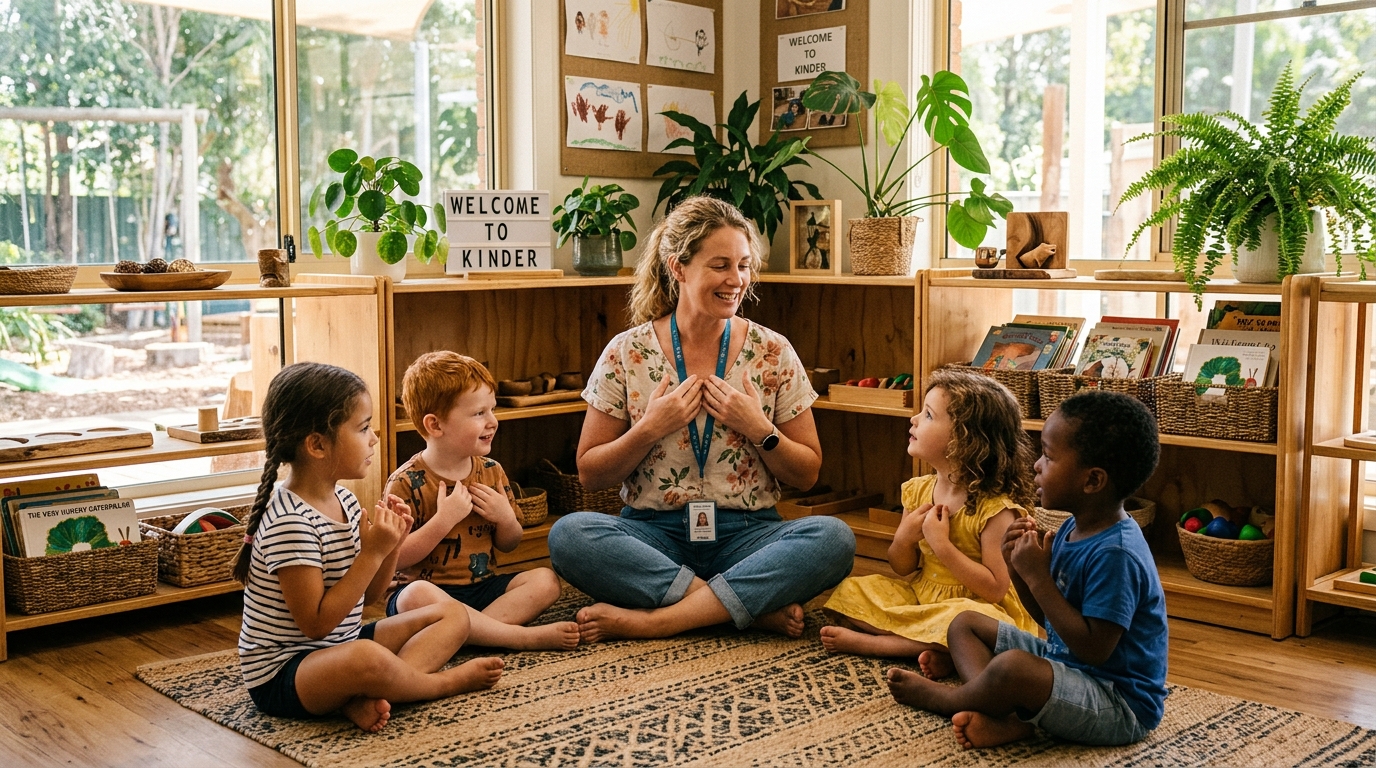
Ask children to pretend they are holding a sweet-scented native blossom in one hand (deep inhale through the nose) and a flickering birthday candle in the other (slow, steady exhale through rounded lips).
Rainbow Reach
Have children inhale deeply as they sweep both arms up to arch an imaginary vibrant rainbow overhead, and exhale softly as they float their arms back down to their sides.
Starfish Breathing
Children spread one hand wide like a sea star and trace each finger slowly with the index finger of their other hand—inhaling as they slide up a finger, and exhaling smoothly as they slide down the other side.
Hot Cocoa Breath
Children cup their hands together as if holding a steaming mug of hot chocolate, breathe in the rich cocoa scent deeply, and gently blow across the surface to cool it down without spilling.
**Pedagogical Note for ECTs:** Practice these breathing techniques during calm, predictable routine transitions (such as before group story time or progressive rest) so children can access them instinctively when dysregulation strikes.
Part 2: Body & Movement Strategies (Proprioception)
When children experience an adrenaline surge or intense frustration, sensory-motor movement helps discharge physiological stress. Proprioceptive input—often called 'heavy work'—sends calming messages directly to the sensory cortex.
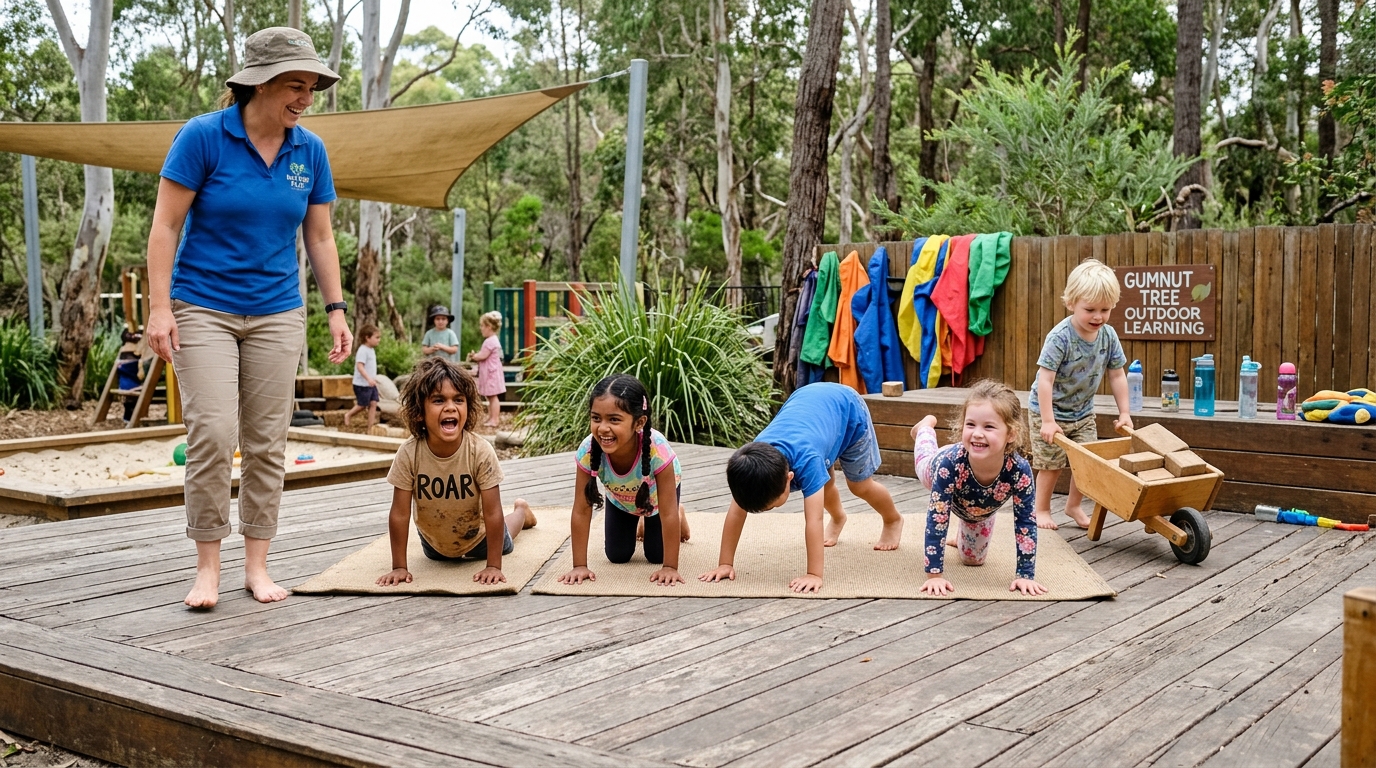
Pushing the Wall
Invite an overwhelmed child to stand about 30 cm away from a solid classroom wall, place their palms flat against the plaster, and push with steady muscular effort for ten seconds. Heavy work provides deep joint pressure that calms fight-or-flight energy.
Animal Yoga Stretches
Guide children through grounded animal movements—such as downward dog, gentle cat-cow spinal flexes, or slow snake slithers—to reconnect their awareness to their physical bodies.
Squeeze and Release (Progressive Muscle Relaxation)
Ask children to scrunch their whole body as tight as a lemon for five seconds, then softly melt like a warm puddle of ice cream onto the carpet cushions.
Heavy Work Classroom Chores
Channel big, scattered energy into purposeful, empowering classroom jobs, such as carrying a wooden block tub, pushing the outdoor trike cart, or resetting floor cushions.
Stomp Out the Grump
Take children outdoors to firmly stomp their feet into the grass or outdoor decking like friendly wombats or dinosaurs, shaking off pent-up physical frustration before returning indoors.
**EYLF V2.0 Connection (Outcome 3.2):** Children combine gross motor movements with self-soothing strategies, building body awareness and sensory integration in inclusive learning environments.
Part 3: Sensory & Calm-Down Tools
Overwhelmed nervous systems often struggle to process verbal instructions. Gentle, multi-sensory inputs act as tangible anchors that gently draw a child back into the present moment.
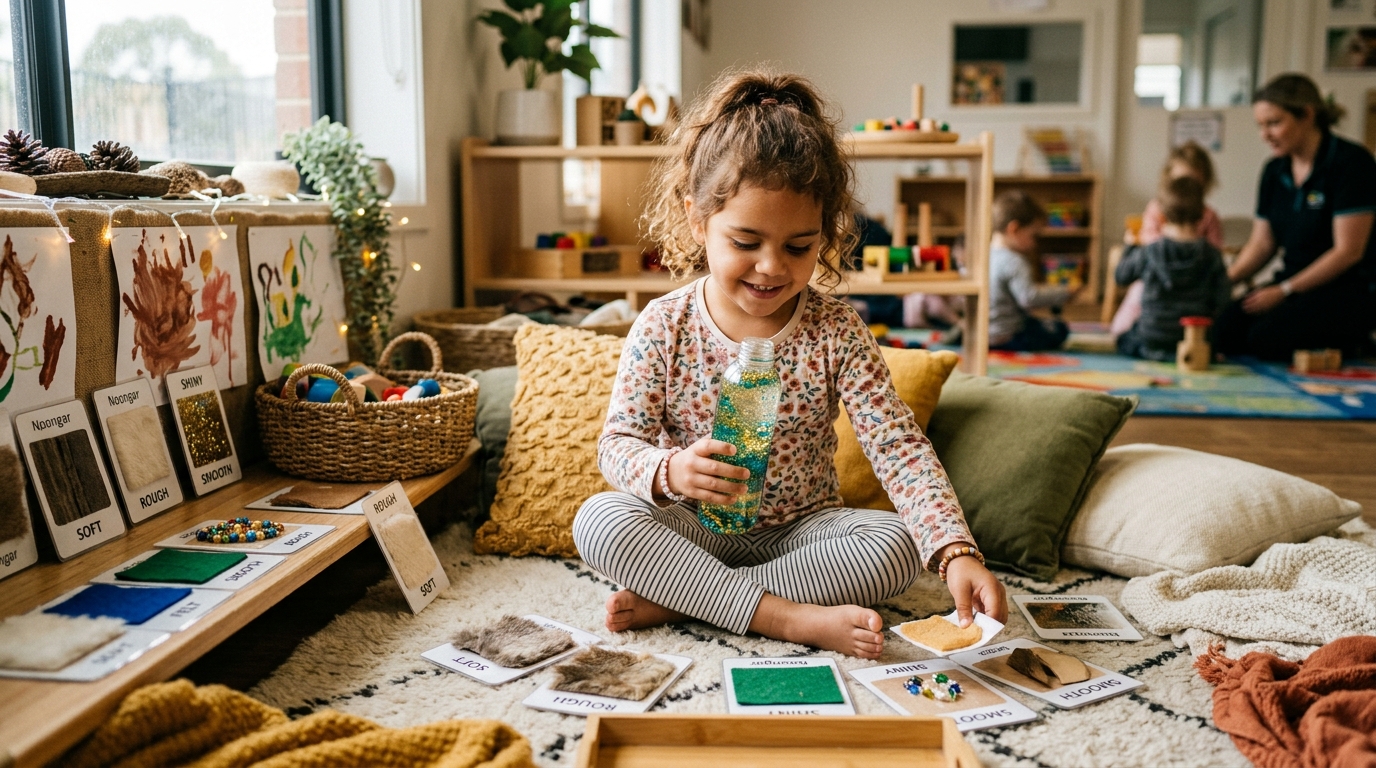
The Cozy Corner (Safe Sanctuary)
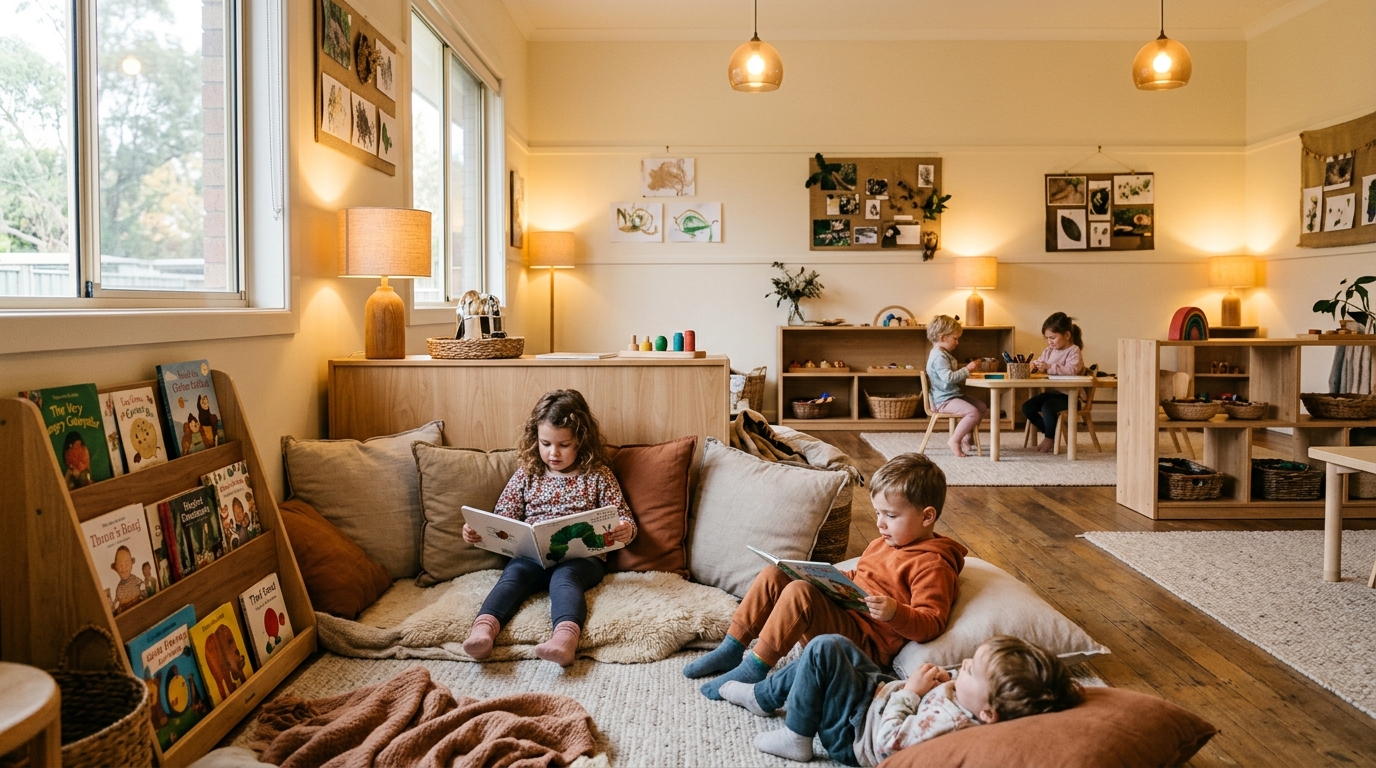
Set up a dedicated, low-stimulation retreat zone with plush floor pillows, muted natural lighting, sheer neutral canopies, and soothing picture books where children can voluntarily retreat to reset.
Glitter Calm-Down Bottles
Keep sealed, shatterproof bottles filled with water, glycerin or clear glue, and fine glitter. Watching the suspended glitter swirl and gradually settle creates a visual rhythmic pacing that slows heart rates.
Playdough Squeezing & Manipulatives
Provide soft therapeutic playdough, clay, or textured silicone stress balls. Pushing, rolling, pinching, and twisting provides an immediate physical outlet for tension or anger.
Tactile Texture Tracing Cards
Offer durable cards mounted with contrasting natural textures (rough bark cloth, velvet, corrugated card, burlap). Tracing these surfaces engages somatic focus and redirects sensory overload.
Deep Pressure Comfort
Keep weighted lap pads, plush weighted animal companions, or cozy fleece wraps available in the quiet nook to provide comforting deep pressure therapy.
**Inclusion & Sensory Planning:** Ensure sensory spaces remain strictly choice-based rather than punitive time-out zones. Children should view the calm corner as a supportive self-care sanctuary.
Part 4: Co-Regulation & Communication Strategies
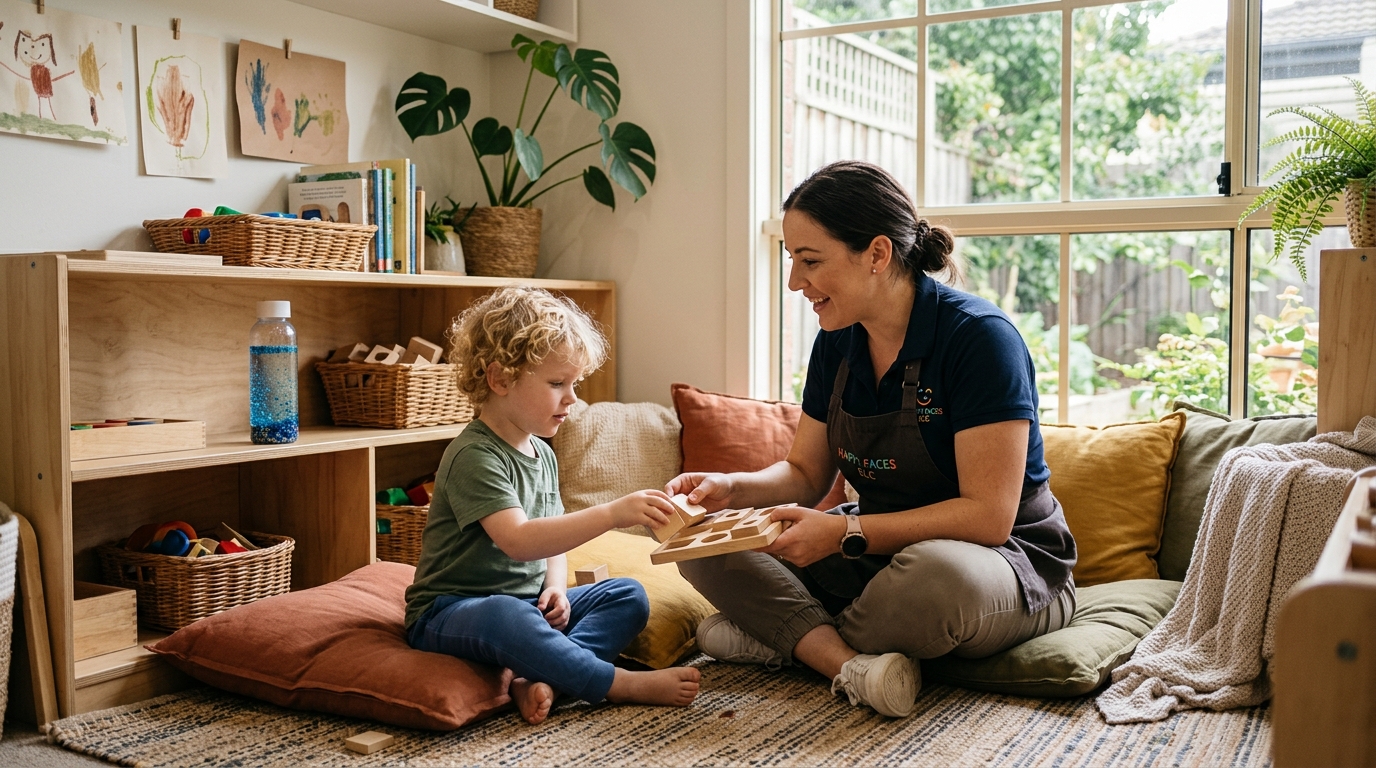
Young children cannot develop true self-regulation without first experiencing abundant, attuned co-regulation. By lending children our own nervous system's calm, we model security, emotional safety, and lifelong literacy.
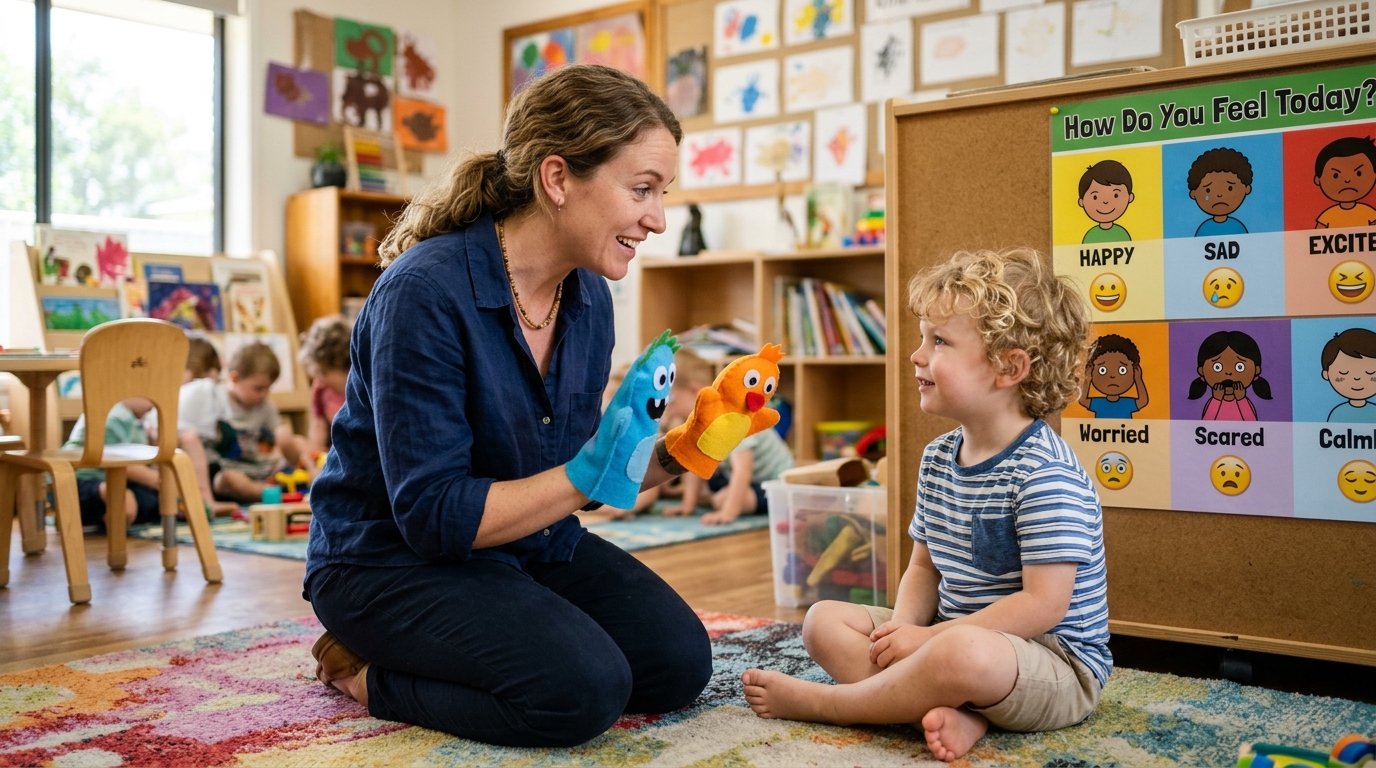
Emotion Labeling with Attuned Presence
Validate the child's feeling before attempting to solve the issue: 'I can see your hands are clenched and your eyes are welling up. You are feeling really frustrated that your block tower tumbled. I am sitting right here with you.'
Visual Feelings Thermometer
Mount an accessible visual gauge with intuitive colour zones (blue for low energy/sad, green for calm/ready, yellow for fizzy/anxious, red for explosive/overwhelmed) to scaffold emotional vocabulary.
The Turtle Technique
Teach children the beloved turtle metaphor: when big feelings boil up, stop your hands and feet, tuck your chin into your chest like a turtle retreating into its shell, take three deep belly breaths, and think of a peaceful step forward.
Emotion Puppets and Role Play
During small-group circles, use persona dolls or puppets to act out everyday dilemmas (sharing favourite paintbrushes, handling accidental bumps), demonstrating empathetic conflict resolution.
Offering Structured Choices
When a dysregulated child resists directions due to feeling out of control, restore agency through two simple, supportive choices: 'Would you like to rest with a book in the cozy corner, or would you like to sit with me and work on this puzzle?'
Positive Affirmation Mirror
Position a child-height acrylic safety mirror bordered with positive strengths-based mantras ('I can handle hard things', 'My feelings are okay', 'I am loved and safe'). Invite children to look into their own eyes and repeat them when seeking reassurance.
Bringing It All Together: Pedagogical Reflection for Teams
Successful emotional regulation in early childhood settings is built upon predictable routines, respectful educator relationships, and developmentally responsive environments. Rather than evaluating whether children remain perfectly quiet, Early Childhood Teachers celebrate when children begin recognising their internal states and seeking appropriate regulatory tools.
**Critical Reflection for Educational Leaders:** How does your room's physical environment and daily rhythm support children's nervous systems throughout high-stimulation transition times? In what ways do educators across the room model calm, attuned co-regulation during challenging moments?